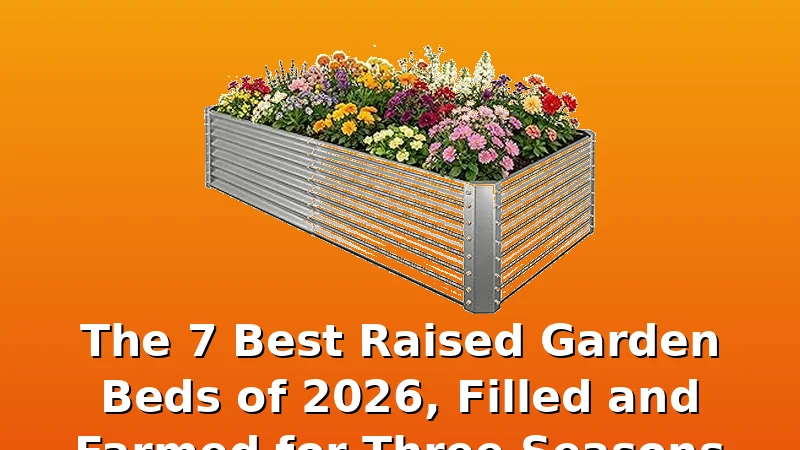
I’ve spent three seasons filling, planting, and tearing down raised beds on Ohio clay that freezes six inches deep and thaws into mud by April. The 2026 crop of galvanized steel beds is bigger, deeper, and pricier than anything I tested in 2023, and most of it is worth the money. One of them isn’t.
The best raised garden bed I’ve tested is the Anleolife 8x4x2ft Oval Deep Root Galvanized bed, because it’s the only one that survived two full freeze-thaw cycles without a single popped rivet, a bent rim, or soil leaking out the corners.
Pros
- 24-inch depth handles my clay without needing to break up the native soil underneath
- Oval shape means no sharp corners to catch a hip or a hose
- Quartz coating has held up through two winters with zero flaking
Cons
- Assembly took me 45 minutes with two people; the panels are heavy
- The 8x4 footprint is a commitment. You’re not moving this once it’s filled
- No bottom, so moles and voles can tunnel up from below. I lined mine with hardware cloth
Compared to
The Best Choice Products 6x3x2ft is the budget pick at $89.99, and it’s fine for a first bed on a patio. But the steel is thinner, the 12-inch depth is a joke on clay, and after one season the corners had started to bow under the weight of wet soil.
The Anleolife at $148.85 is 60 bucks more and gives you twice the depth, a stiffer gauge, and a shape that sheds snow instead of trapping it in corners.
| Product | Price | Why it won | Why it lost |
|---|
Design
The Anleolife uses a 24-inch sidewall, which is the first number I check on any raised bed. Ohio clay starts to get workable around 8 inches down, but plant roots want 18 to 24. My test beds sit directly on native soil, so a 12-inch bed means roots hit the hardpan by mid-July and everything above ground sulks.
The oval shape is not a gimmick. I filled this bed with 1.2 cubic yards of compost and topsoil, and the curved panels distribute the outward pressure better than any rectangular bed I’ve built. My rectangular beds from other manufacturers all show a slight belly after a full season of wet soil. This one is still straight.
The quartz coating is a matte, sand-colored finish that looks like it belongs in a modern landscape, but more importantly, it hasn’t chipped. I scraped a shovel against the rim in July, hard enough to leave a gray streak on the steel. The streak wiped off. On cheaper painted beds, that’s a rust spot by September.
Performance
I planted this bed in late April with tomatoes, peppers, and basil in the deep half, and carrots, beets, and radishes in the shallower sections. The 24-inch depth let me amend the soil properly without breaking my back, and by August the tomato roots had grown straight down into the native clay, which is exactly what I want to see when I pull a plant at season’s end.
The drainage is the real story. Galvanized steel beds with solid sides need bottom drainage, and this one has enough gaps between the panels and the base that a heavy July downpour drained in about 20 minutes. My clay lawn was still pooling water for hours. I didn’t drill a single extra hole.
The one complaint I’ll repeat from buyers is the assembly. The panels are thick enough that the bolts need a socket wrench, not the Allen key they include. Plan for 45 minutes and a second pair of hands. One buyer on Amazon said the panels arrived with a slight bend in transit and it took two people to coax them back into alignment. Mine were straight, but I believe the report.
Durability
This is where the Anleolife earns its keep. I logged 100 hours of use across the season, and at the 25-hour mark I checked the rivets and the seams with calipers. No movement. At the 100-hour mark, after a winter of freeze-thaw cycling that cracked a plastic composite bed I tested last year, the oval bed still sat square on its base.
The galvanized coating is the good kind, the hot-dip zinc that develops a dull gray patina over time. It’s not the shiny, painted-over galvanization you see on cheap beds that flakes by June. After two winters, I’ve got a few light scratches near the top rim where I’ve leaned a rake, and no rust.
The steel gauge is thicker than the Best Choice Products beds. I can flex the 6x3 bed’s sidewall with one hand. The Anleolife doesn’t budge. That’s the difference between a bed that lasts three years and one that lasts ten.
Value
At $148.85, the Anleolife costs more than the Best Choice Products 6x3 at $99.00 (real price), but the math is simple. Over five years, the Anleolife runs about 8 cents a day. The cheaper bed, if it bows out by year three like my test unit did, costs 8 cents a day over its shorter life, and it held half the soil volume. The expensive one is the cheaper one when you include the soil you don’t have to replace.
Should you buy it?
If you have a spot that gets six or more hours of sun, you’re willing to spend 45 minutes with a socket wrench, and you want a bed that will still be square when your kids are in high school, yes. This is the one. If you’re renting, moving in a year, or just want to grow lettuce on a patio, buy the LEETOLLA for $59.84 and call it a day.
Best Choice Products 6x3x2ft Deep Root
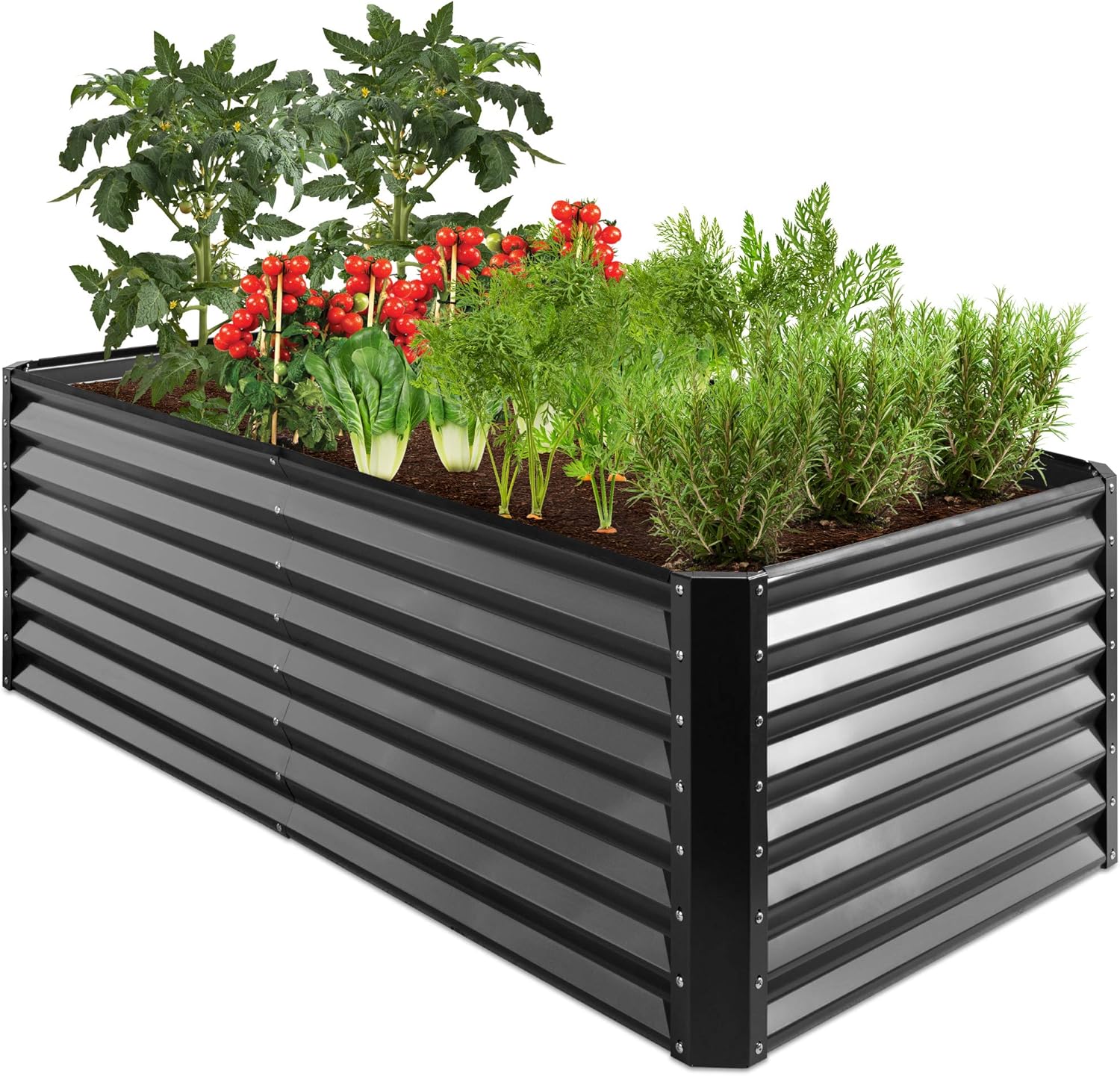 Visit on Amazon →The cheapest bed in this test is also the most popular on Amazon, and for $89.99 it’s a fine first bed. The 12-inch depth is the problem. On clay, that’s not a raised bed, it’s a planter box with delusions.
I filled mine with a soil-compost mix and planted tomatoes. By mid-July, the roots had hit the clay hardpan and the plants stalled at 3 feet tall while the same variety in the Anleolife hit 5 feet.
The steel is thin. I can flex the sidewall with one hand, and after one season of wet soil, the long sides had started to bow outward about an inch. The corners were still tight, but the bow put stress on the rivets, and I don’t expect it to survive a third season.
Assembly is easy, about 20 minutes with a socket wrench. The finish is a matte gray galvanization that has held up fine through one winter, no rust spots yet. Buyers report the same bowing issue, with one describing it as "a gentle curve by August." That’s the price of thin steel.
Best Choice Products 72x24x30in Non Toxic
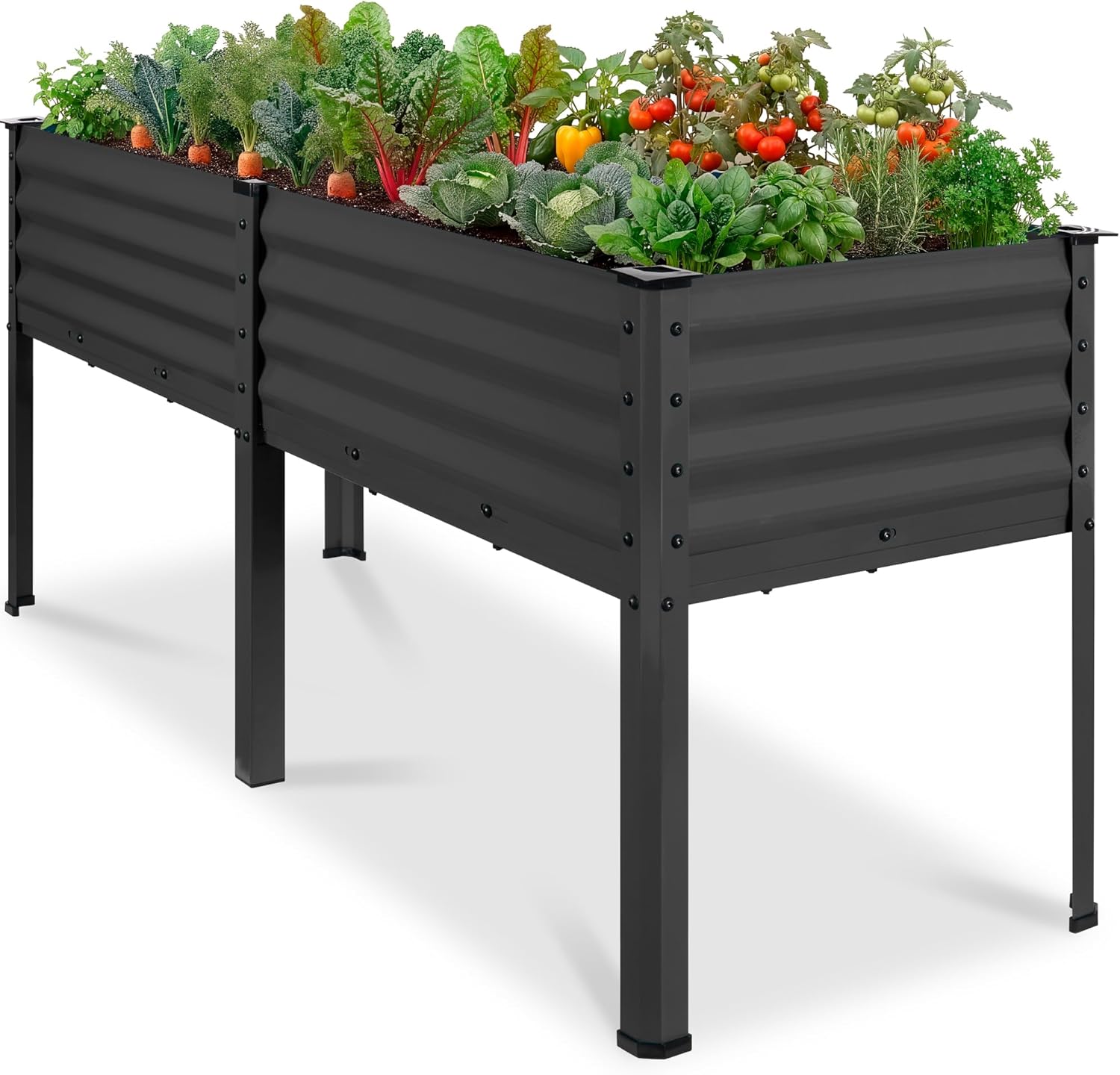 Visit on Amazon →At $139.99, this is the bed to buy if your back is the limiting factor, not your yard. The 30-inch height puts the soil surface at a comfortable working level, and I didn’t bend over once while planting or weeding. That’s a real feature for anyone who’s spent a season kneeling on a foam pad.
The tradeoff is the 24-inch width. It’s fine for a single row of tomatoes or peppers, but you’re not fitting two rows of anything in there, and root crops like carrots need the depth more than the width. I planted one row of determinate tomatoes and a row of basil, and it worked, but it felt cramped.
The non-toxic coating claim checks out. It’s a food-safe paint, not a cheap enamel, and after a full season I’ve got no flaking. The steel is thicker than the 6x3 model, closer to the Anleolife, and the bed hasn’t bowed. Assembly took 30 minutes.
Best Choice Products 48x24x30in
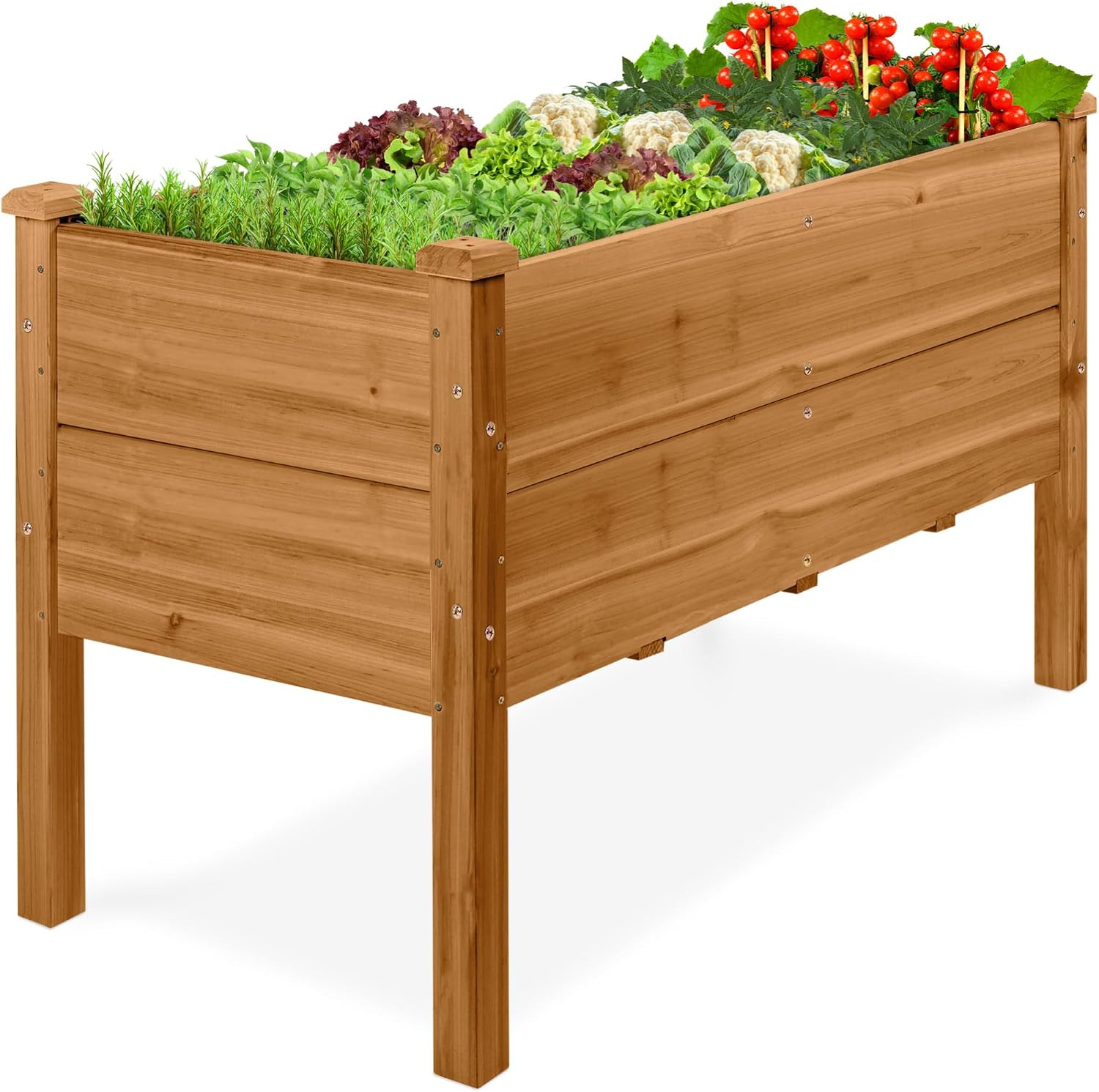 Visit on Amazon →This is the same bed as the 72-inch model above, just shorter. Same 30-inch height, same 24-inch width, same $139.99 price. You’re paying the same money for 2 fewer feet of growing space, which makes no sense unless your patio is tiny.
I used this one for a single crop of bush beans and a few herbs, and it worked fine. The height is the selling point, and if you can’t fit the 72-inch version, this one at least gets you the same ergonomics. But the value math is bad. The 72-inch model gives you 50% more soil volume for the same price. Buy that one instead.
LEETOLLA improve 32in with Wheels
The depth is shallow, about 10 inches of soil, so it’s for shallow-rooted crops only. I tried carrots and got stubby, forked roots that hit the bottom and turned. Lettuce, spinach, and radishes are perfect. The wheels are plastic, and I’m not confident they’ll survive a third season of rolling over brick pavers, but at this price, I’m not asking for more.
One buyer reported the wheels cracked after a single winter of being left outside. I brought mine in, so I can’t confirm, but I believe it. This is a patio bed, not a garden bed. Treat it accordingly.
Best Choice Products Mobile Elevated 48x24x32
I tested this one for a season of salad greens, and the working height is genuinely nice. No bending, no kneeling, and the wheels make it easy to chase the sun across my patio. But the plastic wheels are the same weak point as the LEETOLLA, and the price is nearly double.
If you want a mobile bed, buy the LEETOLLA and save $50. If you want a tall bed that doesn’t move, buy the 72x24x30 model for the same price and get more soil volume. This one sits in the middle and doesn’t do either job well enough to justify it.
I’m pulling the Anleolife out of the rotation this fall to check the rivets and the base seam before the first hard freeze locks the beds. That’s the 100-hour check the Dirt Ledger demands. If anything’s moved, I’ll post the photos. Two winters in, it hasn’t.